
Golf Psychology Coaching:
Work With a Golf Mental Coach From Anywhere
Your Swing Is Fine. Your Mental Game Is Costing You Strokes.
Golf psychology is the part of your game that decides whether your practice shows up on the scorecard. In golf mental coaching, you work on the thoughts and habits behind your shots: staying confident after a bad hole, settling first-tee nerves, and keeping your focus when the round is on the line.
You work one-on-one with a certified golf mental coach over Zoom, from wherever you live. The strategies you learn are the same ones Dr. Cohn has taught to PGA Tour, LPGA Tour, and Champions Tour players over more than 40 years.
Sessions run 45 to 60 minutes, and most golfers work with a coach for one to three months.
What Is Golf Psychology Coaching?
Golf psychology coaching applies sport psychology to the golf course. It targets the mental barriers that cost you strokes: confidence that disappears after a bad shot, first-tee nerves, frustration that carries from hole to hole, and the difference between how you score on the range and how you score in tournaments.
Our certified golf mental coaches use the GMAP and the Golfer’s Mental Edge 2.0 Framework to build a personal mental game plan for each golfer. Golfers work with us from anywhere in the world, from juniors starting to compete to players on professional tours.
Trusted by PGA Tour, LPGA Tour & Champions Tour players since 1991
Call us today: 407-909-1700
What Does a Golf Mental Coach Do?
A golf mental coach works on the part of your game the driving range cannot fix. You build confidence that lasts under pressure, learn to reset quickly after a bad shot, trust your swing during a round, manage expectations in tournaments, and create a preshot routine you can repeat on every shot.
Your coach uses the GMAP and the Golfer’s Mental Edge 2.0 Framework to pinpoint the mental challenges holding back your scores, then writes a coaching plan around your goals, your level, and your tournament schedule.
Is Your Mental Game Holding Back Your Golf?
Your swing isn’t the problem. Your mental game is. Sound familiar?
→ One bad shot wrecks your confidence
→ You play well on the range and poorly on the course
→ First-tee nerves hurt your opening holes
→ Frustration follows you from one hole to the next
→ The yips take over when it counts
Golf Mental Coaching Trusted by Tour Players and PGA Professionals
★★★★★ 4.7 out of 5 — See our reviews on Google
✅ A+ Rated — BBB Accredited Business since 2010
“Qualified for the European Tour”
“Thanks for all your help Dr. Cohn. You can rest assured that all our work came in very handy when I successfully qualified for the European Tour. I’m very happy and extremely thankful to you for helping me achieve this massive goal of qualifying for the European Tour! Thanks a lot again.”*
~Alex Rocha, European Tour Player
“Trusting His Game and His Putting Stroke”
“The mental side is everything in golf, the ability to see your shot or line and trust that you can hit that shot or putt. Dr. Cohn has helped me trust my game and putting stroke.”*
~Frank Lickliter, PGA Tour, Nike Tour Winner
“Self-Talk and Confidence Improved, Scores Dropped”
“I am a PGA Professional and when I connected with you, I just wanted some ideas to help my students. But thanks to you, my own game has improved! I think I will shoot 69; negative thoughts have vanished; and my self-talk and confidence has improved tremendously. I will be referring my students to your web site.”*
~Bill Allen, PGA Pro
Ready to Bring Your Practice Game to the Course?
Book a free introductory Zoom session at Peak Performance Sports with a golf mental coach and find out which mental skills will help your game the most:
How Golf Mental Coaching Works With Us
Each golf mental coaching program follows a four-step system built by Dr. Patrick Cohn, who trained under Dr. Bob Rotella at the University of Virginia and has coached PGA Tour and LPGA Tour players for more than 40 years. Sessions run 45 to 60 minutes.
Step 1: Baseline Assessment and Golf Stats
Take the Golf Mental Aptitude Assessment (GMAP) to pinpoint your mental game strengths and weaknesses. We pair it with your golf stats, including scoring average, greens in regulation, and putts per round, to set a baseline and track your progress.
Step 2: Golf Mental Game Strategies
Learn mental game strategies built for golf: pre-round preparation, a preshot routine, emotional control on the course, a reset after bad shots, and confidence tools for tournament play.
Step 3: Practice Between Sessions
Between sessions you work through the Golfer’s Mental Edge 2.0 audio and workbook program, then apply what you learned to your next round or tournament.
Step 4: Play It on the Course
Take your customized pre-round preparation, guided imagery, and preshot routine into competitive rounds, along with on-course composure strategies, then review the results with your coach.
What You Get from Golf Mental Coaching
Golf psychology coaching helps competitive golfers find and remove the mental blocks that hold back their scores. Here’s what changes:
- Your range and practice-round confidence carries into competitive rounds
- Confidence that stays steady after bogeys, bad holes, and poor shots
- A preshot routine that gets you into a smooth flow before every shot
- Composure under pressure: you let go of a bad shot and move on right away
- Freedom to swing with commitment instead of steering the ball
Every coaching program includes the Golf Mental Aptitude Assessment (GMAP), a custom weekly Mental Game Plan, weekly Zoom sessions of 45 to 60 minutes, unlimited email support, and the Golfer’s Mental Edge 2.0 audio and workbook. Questions? Call us at 407-909-1700.
Golf Mental Coaching for Every Competitive Golfer
We coach junior golfers, college golfers, adult competitive golfers, and touring professionals. Whatever your level, your coaching plan is built around your goals and your competition schedule.
Golf Mental Game Problems We Coach
- The yips: full swing yips, driver yips, and how to tell if you have the yips
- First-tee jitters and golf nerves
- Taking your range swing to the course
- Overthinking your swing
- Staying calm after a bad shot
- Closing out a tournament and building a consistent preshot routine
Trained 1,000+ Golfers. Junior Through PGA Tour.
Dr. Patrick J. Cohn, Ph.D., founder and president of Peak Performance Sports, LLC, is one of the world’s best-known mental performance coaches. Read his full bio and credentials. He earned his Ph.D. in Applied Sports Psychology at the University of Virginia under Dr. Bob Rotella, and his master’s degree at California State University, Fullerton under Dr. Ken Ravizza. In more than 40 years of coaching he has worked with PGA Tour and LPGA Tour professionals, Olympic athletes, NFL teams, NASCAR winners, and national champions in over 35 sports. He created the Golfer’s Mental Edge 2.0 program, the Mental Game Coaching Professional (MGCP) Certification, and the best-selling Confident Athlete program series.
Why Virtual Coaching Works for Golfers
| Factor | Virtual (Zoom) | In-Person |
|---|---|---|
| Access | Any location, worldwide | Local area only |
| Scheduling | Fits around your rounds & tournament schedule | Office hours, commute required |
| Session Format | Same structured 1-on-1 coaching | Same structured 1-on-1 coaching |
| Effectiveness | Research-backed, equally effective | Research-backed, equally effective |
| Getting Started | Usually within 1 week | Depends on local availability |
| Travel Required | None | Yes, drive to office |
| Tools Included | GMAP + Golfer’s Mental Edge 2.0 | Varies by provider |
Meet Your Golf Mental Coach
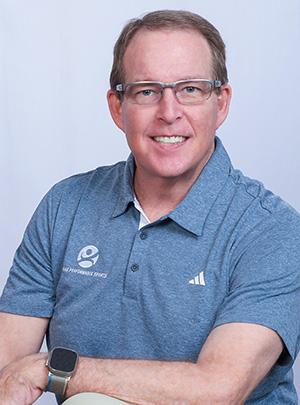
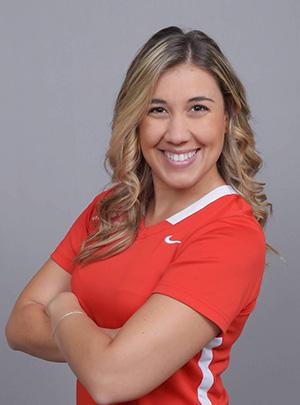
Every coach on our team is certified and experienced in golf. When you contact us, we match you with the coach who fits your level and your mental game challenges. Learn more about our certified mental performance coaches.
READ FULL BIO
READ FULL BIO

READ FULL BIO

READ FULL BIO
More from Golfers
“I shot my best tournament scores to date”
“Jaclyn was great to work with. I am now more confident over the ball and not worrying about things out of my control. This summer, I shot my best tournament scores to date, including my first under par tournament. I am more positive and relaxed. Highly recommend Jaclyn as a mental coach.”*
~Leo Dixon, Golf, IMG Academy
Golf Mental Coaching FAQ
What is a golf sports psychologist?
A golf sports psychologist, also known as a golf mental performance coach, teaches golfers the mental skills that keep their game steady under competitive pressure: confidence over the ball, preshot routines, refocusing, and composure after mistakes. The work is about performance, not therapy, and it helps you play in competition the way you play in practice.
What does a golf mental coach actually do?
A golf mental coach helps you find and fix the mental barriers behind your scores. That means confidence that holds under pressure, composure after bad shots, trust in your swing during rounds, realistic expectations in tournaments, and a preshot routine you can repeat. Each golfer gets a personal mental game plan built from the GMAP and the Golfer’s Mental Edge 2.0 Framework.
Can I do golf mental coaching online?
Yes. Most of our golfers work with us over Zoom. Sessions are weekly, one-on-one, and last 45 to 60 minutes, with the same structure as in-person coaching. A junior golfer in Texas and a club player in London get the same coaching. Most golfers start within a week of contacting us.
How much does golf mental coaching cost?
Self-guided programs, including The Golfer’s Mental Edge 2.0, start at $79. Coaching programs add weekly one-on-one sessions with a certified mental coach, the GMAP assessment, a custom mental game plan, unlimited email support, and the Golfer’s Mental Edge 2.0 workbook. Contact us for coaching pricing.
How long does golf mental coaching take?
Most golfers work with a coach for one to three months. Many notice better composure and decision-making within the first few sessions, especially after bad shots and when running their preshot routine under pressure, and steadier scoring usually builds over 4 to 8 weeks.
What age should a golfer start mental coaching?
Most junior golfers benefit from starting around age 12, when tournament pressure, rankings, and the gap between practice rounds and competition begin to show. We coach junior, college, professional, and adult competitive golfers. There is no upper age limit, so senior and recreational competitive golfers are welcome too.
Start Playing Like You Practice
Book a free introductory Zoom session. Tell us your level, your goals, and what is holding your golf game back, and we will get you started within a week:
No commitment and no travel. Sessions work over Zoom, FaceTime, or phone, from anywhere.
Or Call us today: 407-909-1700

What Golf Psychology Research Shows
Preshot routines work across sports. A meta-analysis of pre-performance routines found moderate-to-large effects in experimental studies, including under pressure (Rupprecht et al., 2021). Dr. Cohn’s own study of elite collegiate golfers found that coaching improved how consistently they followed their mental and behavioral preshot routines (Cohn, Rotella & Lloyd, 1990).
Focus holds up better with training. In a study of 22 elite golfers, players trained to keep a steady final gaze before the putt held it under pressure, while untrained golfers lost it when anxious (Vine, Moore & Wilson, 2011).
Cognitive-behavioral training improved novice golfers’ putting. In a 14-week study of 65 novice golfers, those in a cognitive-behavioral program showed more intrinsic motivation, more consistent preputt routines, and better putting than golfers in a physical-skills program or no training (Beauchamp et al., 1996).
Imagery and self-talk training helped amateur golfers. In a two-month study of 32 amateur golfers, significant improvement followed on five psychological and skill measures, including automaticity and putting skill, and players lowered their handicaps (Thomas & Fogarty, 1997).
Choking and the yips. In a ten-month study of two professional golfers who choked regularly, a program of process goals, cognitive restructuring, imagery, simulated pressure training, and a pre/postshot routine alleviated their choking (Hill et al., 2011). Small studies also suggest imagery and cognitive-behavioral work can reduce the yips (Bell et al., 2009; Bell et al., 2011; Milne & Morrison, 2015).
Research findings describe groups of golfers, and many of these studies are small. They do not guarantee results for any individual golfer.
Disclaimer
*Testimonials found on this site are examples of what we have done for other clients, and what some of our clients have said about us. However, we cannot guarantee the results in any case. Your results may vary and every situation is different. No compensation was provided for these testimonials.
Last Updated on September 21, 2026